Tuesday, 20 January 2015

TAGUS COVE, THE LAUNCH PAD FOR A HIKE TO DARWIN LAKE


Nov. 22/14 excursion to Tagus Cove continued.  As we started the strenuous hike to Darwin Lake we had a chance to examine cliff graffiti from a closer point of view.  Knowing that relatively few human beings had been here since their writing made the viewing special.
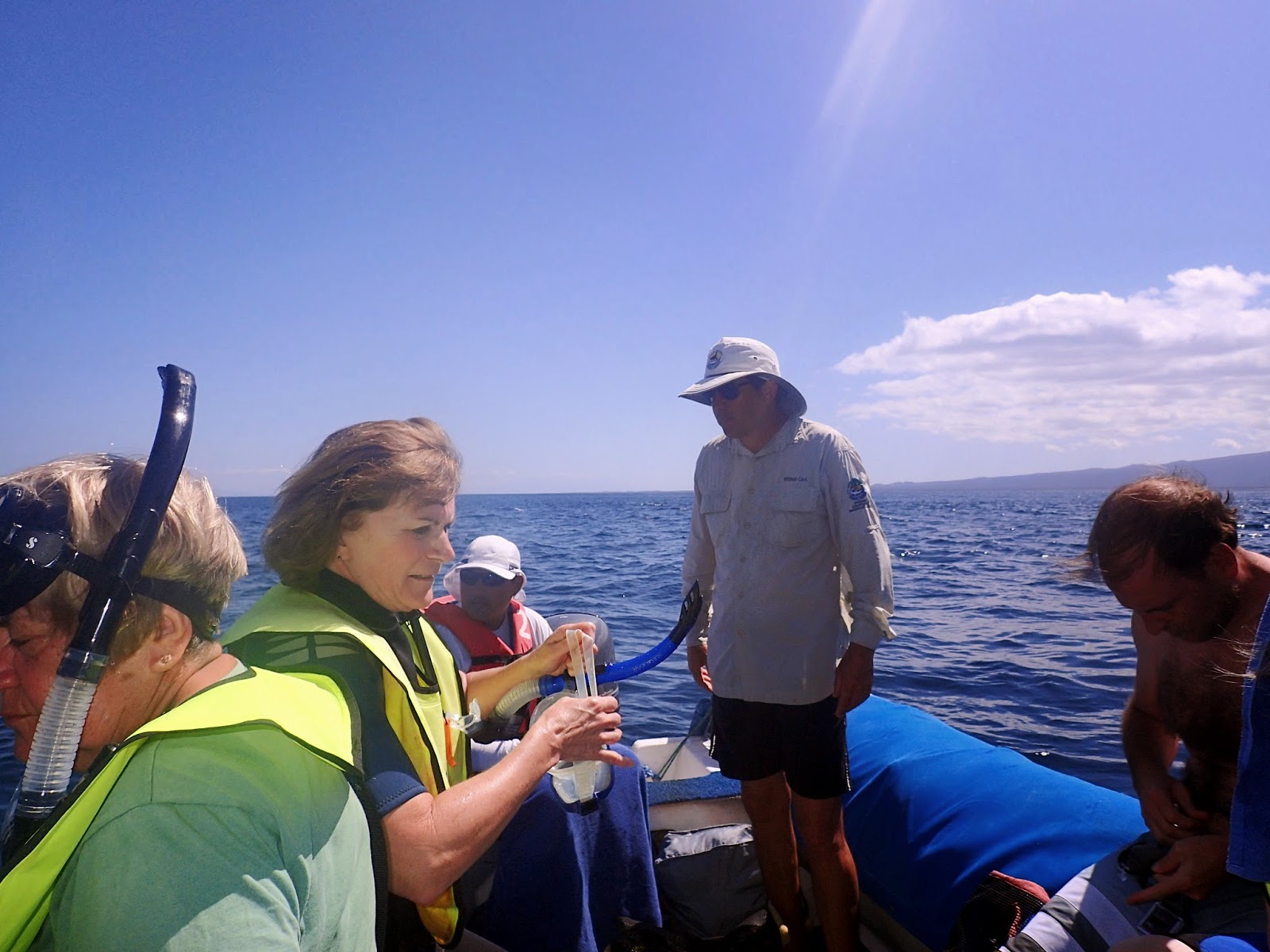


This would be us getting ready to jump into the waters of Tagus Cove.   It was suggested that we wear wet suits because the Humboldt Current was cooling the waters.  Muriel and I, hardy ladies that we are were able to snorkel without the wet suits.


As we approached the shore we could look up and see the animal activity


We looked up from the water to enjoy the view


A flightless cormorant is sharing space with a resting marine iguana


And underneath me I saw an awesome striped fish


And was also able to take a good look at this turtle's pretty head


We are back on board just in time to prep for another dinghy ride and a big hike to Darwin Lake


Checking out writings along the way


I imagine the writers, pirates and whalers from long ago


FINALLY WE ARRIVE AT DARWIN LAKE
We followed the trail established in 1835 by the Darwin group when the Beagle anchored here in 1835.  Darwin Lake is twice as salty as the ocean.


A closer look at Darwin lake


Darwin Lake is in the foreground.  You can see our boat Galapagos Legend on the ocean in the background


Thursday, 15 January 2015

ADVENTURING IN BOLIVAR CHANNEL CONTINUES


Nov. 22/14 was a fun filled highly energetic day.  We started out with the Urbina Bay walk to see the largest species of Iguana in Galapagos, then did some deep water snorkelling, followed by a boat trip north to Tagus Cove.  We jumped in for more snorkelling at Tagus Cove.  We dinghied to land, checked out lots of graffiti and then did quite a strenuous hike to Darwin Lake.

To top the day off we we had a grand King Neptune party on the boat in the evening.  Who would of ever thought we could manage four expeditions and a big party in one day.  Lets start with the party and some on board socializing.


WE BRAVED THE WINDY BARBQUE ON NOV. 21.  NANCY AND NEIL HAD WIND BLOWN HAIRDOS


AND THEN THERE WAS GINNY OUR FAVOURITE GOLF PRO BROUGHT TO HER KNEES, CORRECTION- BELLY


THE COOKS BRAVED THE WIND TO COOK OUTDOORS


KING NEPTUNE RULED THE PARTY


QUEEN RENATA DESERTED THE KING FOR THE SHIP'S DOCTOR


OUR REGULAR DINING TABLE INCLUDED MURIEL AND I, YOUNGER NEIL FROM SEATTLE,  NANCY AND NEIL, CANADIANS WHO LIVE ABROAD.  WE WERE A VERY CONGENIAL BUNCH.  NEIL THE  HUSBAND OF NANCY DID A LOT OF FABULOUS GOPRO FILMING FOR ME.

TAGUS COVE AND DARWIN

Tagus Cove is a historical site visited by Darwin.  Visitors over the past centuries have carved graffiti into the cove cliff walls until the Galapagos National Park was established in 1959.  Tagus was the name of a British ship which anchored here in 1814 in search of giant tortoises to be used as a food supply on the boat.

Tagus Cove is a perfect place to drop anchor.  It is protected by the surf.  It was a resting place for pirates and whalers as well as it's most famous visitor Charles Darwin.

Charles Darwin had worked out a number of his evolutionary theories before visiting Galapagos in 1835.  Here in Galapagos Charles was able to develop proof of his theories.  The uniqueness of the islands, their isolation, their different elevations and the plentiful supply of species in varied states of development gave him the information he needed to proffer his theories.  

The following signs in the Darwin Research Centre in Puerto Ayora give the setting for relatively rapid evolution in the Galapagos.


NEIL TAKES A PICTURE OF SEA LIONS BASKING IN THE SUN AT TAGUS COVE.  NOTE THE GRAFFITI ON THE CLIFFS 


MORE GRAFFITI


MURIEL POSES WITH STATUE OF YELLOW IGUANA IN PUERTO AYORA

THIS MARINE IGUANA LOOKING OUT OVER URBINO BAY (as seen from a snorkelling position) TRULY IS THE "KING OF THE CASTLE"

Add caption


FOLLOWING DARWIN TO URBINA BAY AND TAGUS COVE


The morning of Nov. 22/ 14 found us deep into the Bolivar Channel anchored at Urbina Bay.  Darwin's Beagle had made its way to this point.  We know for certain that he laid anchor at Tagus Cove for a period of time.  Many whalers and buccaneers had been here before him as we witnessed through graffiti on the steep cliffs surrounding the cove.

There were whales around our boat in the morning.  The setting was serene and pristine with nary a boat in sight.  We were far south in the channel which now opened up to open ocean in the west.  We went by dingy to land in Urbina Bay on the west side of Isabela.

Our first excursion of the day was a long hike in search of very large yellow iguanas.  Our guide told us that their average age was over 100 years.  We also saw giant tortoises in the growth along the path.


Yellow iguanas rule the pathway at Urbina Bay


LOOK AT ME, AREN'T I LOVELY


I HOPE THAT YOU CAN SEE THE FINE DETAIL ON MY PRETTY FACE


MURIEL GETS UP CLOSE FOR A BETTER LOOK


I FEEL VERY BRAVE AS I LOOK AWAY


ALWAYS A GIANT TORTOISE LURKING NEARBY


THE LEGEND IS WAITING IN THE DISTANCE AND A DINGY IS ON ITS WAY TO PICK US UP AT URBINO BAY


MURIEL AND I OFF FOR OUR FIRST SNORKEL OF THE DAY


MANY SCHOOLS OF FISH SWIMMING AROUND US.  THESE LOOK LIKE BLACK SALEMA


THIS PELICAN IS CHECKING OUT HIS DINNER


JUST TO THINK THAT THIS SEA TURTLE CAN TRAVEL THOUSANDS OF MILES THROUGH THE OPEN OCEAN


AND THIS IS ME AT URBINA BAY SPOTTING MY BELOVED GIANT SEA TURTLE.  WE CONTINUED TO HAVE A NICE VISIT

BELOW YOU SEE US SCOOTING ALONG THE LAND OF URBINA BAY


Monday, 12 January 2015

BLUE FOOTED BOOBIES AND THEIR DANCE OF LOVE

Blue footed boobies are found on many Galapagos islands whereas the other types, red footed and nazca are found less often.

Capturing wondrous sights like the following penguins on lava rocks, blue footed boobies galore and sea lions ever present during bird mating rituals can be accomplished by rank amateurs like myself.  However the following clips are sometimes borrowed from fellow travellers.  The "booby novella" is borrowed from Charline Quenee.  


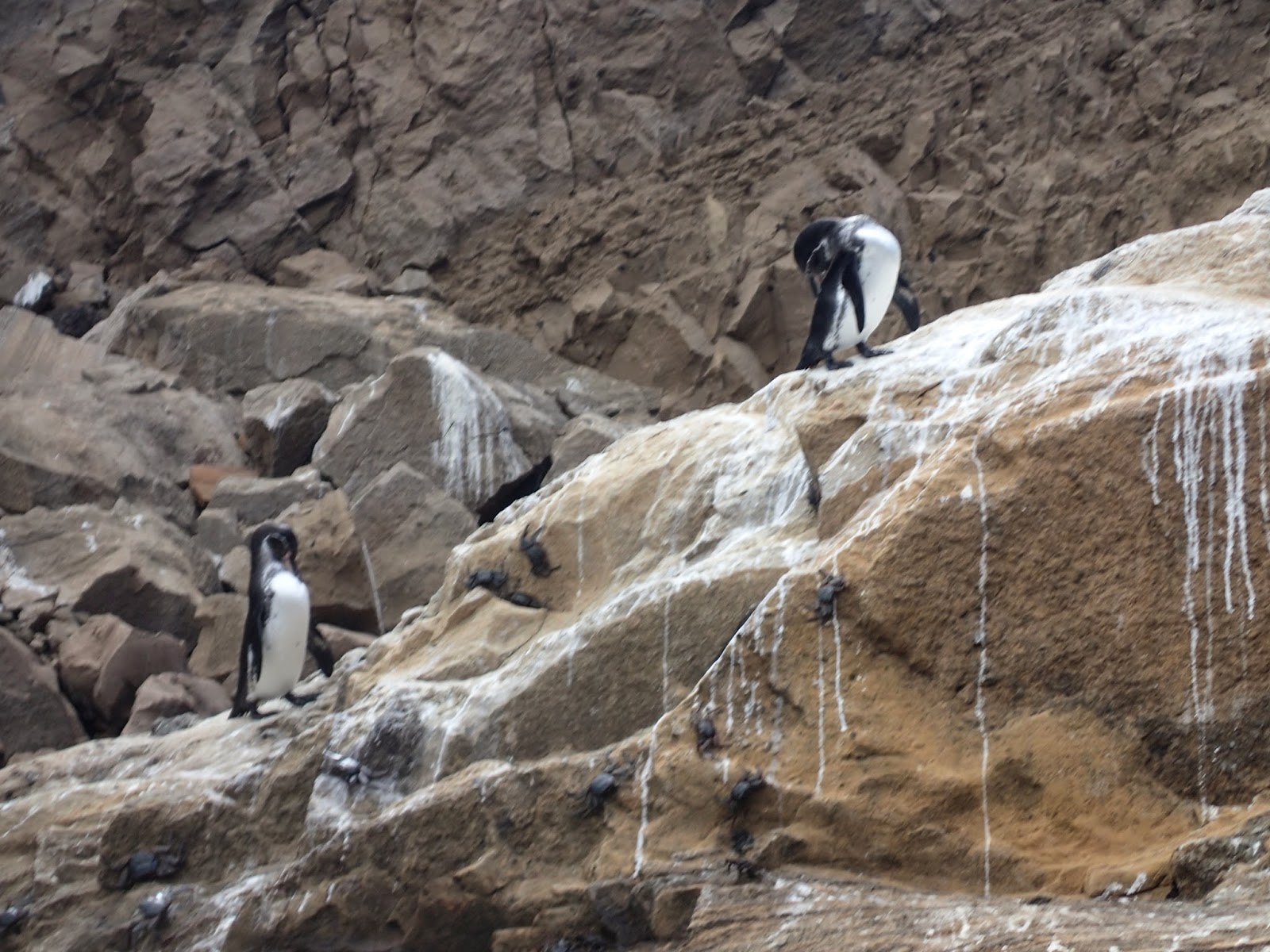
These Galapagos penquins have one mate for life and lay their eggs in lava cracks


The penquins seem to find room on the rocks to socialize


Blue footed boobies have more room at Los Tuneles.  They have space  to do their mating dance


I think that these two have made a connection.  Love is in the air. 


Friday, 9 January 2015

ORCAS SPOTTED IN THE GALAPAGOS


THE GALAPAGOS ISLANDS ARE A PART OF ECUADOR LOCATED 600 MILES OFF OF MAINLAND ECUADOR 


THIS MAP OF GALAPAGOS SHOWS WHERE WE WENT ON OUR LATEST CRUISE
I have travelled in Galapagos many times and made my way to most of the islands.  This particular cruise took Muriel and I, Ginny and the Vancouver golfers and at least 80 more people on the Galapagos Legend to the most remote and pristine part of the Galapagos


DOROTEA (that's me) LARGE AND ALIVE WITH SHADOW AND ZERO

I continue to develop my blog in a chronological fashion but am in different locations.  I am loving this location where I can enjoy these beautiful creatures

These ORCAS (killer whales) were spotted at the south end of Isabela Island.  Count the fins.  It was a large pod of at least 14 whales.  This migratory pod was travelling through around the middle of Nov.


THESE ORCAS CAME RIGHT UP NEAR THE BOAT


JUST HANGING OUT IN THE PACIFIC 


COUNT THE FINS
HOW MANY ORCAS CAN YOU FIND ?


THERE ARE BEAUTIFUL CREATURES ALL OVER OUR WORLD


Thursday, 8 January 2015

THE GALAPAGOS LEGEND POWERS INTO ONE OF THE MOST PRISTINE AREAS OF THE WORLD, Sat., Nov. 22/14


We  pulled up anchor at Rabida island late on the 21st and headed north up the east coast of the giant island Isabela.  As we motored along the chef served up a delicious barbqued meal on a very windy deck.  Later that night the crew and several guests enjoyed Karayoke in the bar.  Renata led some of the Vancouver golfers in song.

Isabela with a land mass of 1771 square miles is by far the largest Galapagos island.  It has one town, Puerto Villamil. The island is largely uninhabited.  It is impossible to traverse the island on land. A very limited amount of marine traffic is able and allowed to travel around the island.  We saw no other boats once we left Rabida.


IGUANAS AND PENGUINS SHARE THE SHORE 


During the night our boat, The Galapagos Legend, travelled to the northern tip of Isabela, rounded the top and headed south down the Bolivar Channel.  Much of the trip there was nothing but ocean to the west of us.  It takes a hard driving sailboat with a good wind 35 days to reach the next islands, the Marquesas of French Polynesia.

The waters along the western coast of Isabela are much cooler than other Galapagos waters.  The Humboldt current pushes up from the south and mixes with the equatorial waters.  This mixture of waters provides the right mix of food for both tropical and southern animal species.  Varied animal life thrives throughout the area.

Almost all of the Galapagos penguins, the only penguin species in the world living in the northern hemisphere, live on this western portion of Isabela.  We were lucky to see many along the shore and also in the water.


SALLY GO LIGHTLY


SHARING SPACE WITH A SEA LION


Wednesday, 7 January 2015

STEP SOUTH TO SEE PENGUINS IN ANTARCTICA


Taking a sidestep from Galapagos to show some video of Antarctica.  I thought that these videos were permanently lost but John found them on one of many external drives that we have.  They were taken on my iphone almost three years ago in Antarctica. I was able to just sit and walk among hundreds, no thousands, of Adele, Gentoo and Chinstrap penguins.  I think that we encountered a Magellan or two.  Enjoy watching the babies (one month old) in their newborn fluff. the social interaction of adult penguins, nesting and much more.


Penguins in Antarctica

I wanted to slip these in because I am just coming to penguin territory in the Galapagos where I will feature the Galapagos penguin.  I thought it interesting to make the comparison